
Meet Dr. Raymond Lau
Sports Chiropractor & Rehab Specialist

Dr. Raymond Lau
Clinical Director, Sports Chiropractor
Dr. Raymond Lau is the founder and clinical director of Pinnacle Rehab and Performance. Born in Toronto and now based in Melbourne, Ray got his B.Sc in Kinesiology (the study of human movement and exercise science) at the University of Waterloo before completing his Master of Chiropractic (Macquarie University)— giving him a clinical foundation that sits at the intersection of movement science, injury rehabilitation, and performance training.
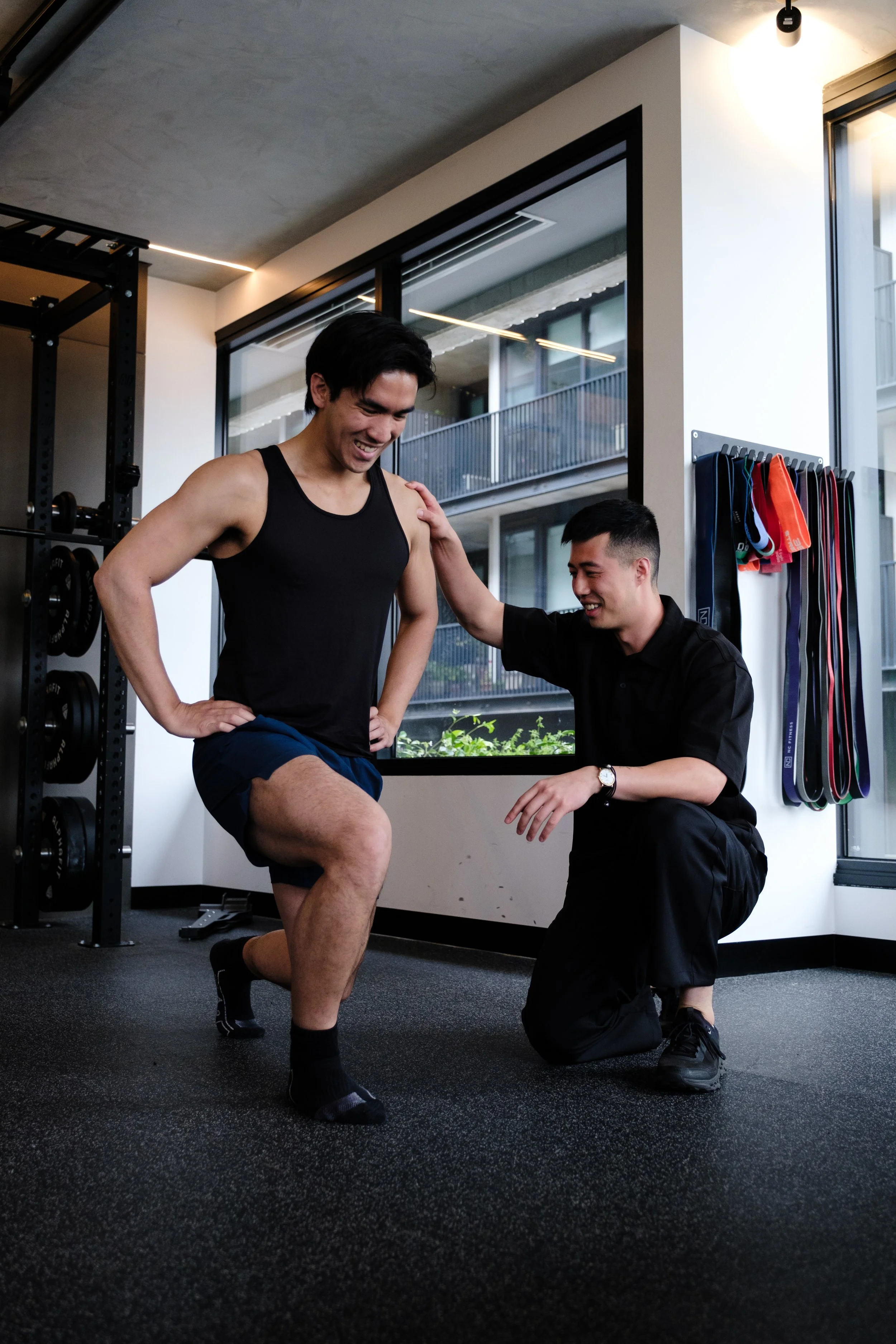
His background is not typical for a chiropractor. Before entering clinical practice, Ray worked as a strength and conditioning coach with athletes across high school, national, and professional levels in volleyball, basketball, and hockey. That experience shapes everything about how Pinnacle Rehab and Performance operates — rehabilitation is not an adjunct to performance at this clinic. They are the same process - and it is how he has helped hundreds of clients.
Qualifications & Credentials
Master of Chiropractic — Macquarie University, Sydney
Bachelor of Science, Kinesiology (Exercise Science) — University of Waterloo, Canada
Strength and Conditioning coaching experience across high school, national, and professional-level sport
Clinical Philosophy
Ray's clinical approach is built on one principle: the gap between "pain-free" and "performance-ready" is where most rehab fails. The majority of clinical models discharge patients when symptoms resolve. At Pinnacle Rehab and Performance, that point is roughly the middle of the process — not the end.
Every client receives a structured, phased program with objective milestones. Progress is tracked. Criteria are met before advancing. And performance goals — returning to sport, lifting heavy, running without pain — are built into the plan from session one, not added as an afterthought.
This is not a passive treatment model. Manipulation and manual therapy are tools within a broader rehabilitation process, not the endpoint. The endpoint is a client who is stronger, more resilient, and better informed about how to manage their body long-term.
Clinical Interests
Low back pain — including lumbar disc injuries, chronic non-specific LBP, and facet joint conditions
Knee injuries — ACL and MCL rehabilitation, patellofemoral pain, patellar tendinopathy
Lower limb injuries — hip pain, gluteal tendinopathy, ankle sprains, Achilles tendinopathy
Shoulder pain — rotator cuff tendinopathy, general shoulder pain
Tendinopathy management — evidence-based progressive loading protocols
Athletic development and return-to-sport programming