
Sports injury rehabilitation for athletes and active individuals who want more than pain relief. Whether you play basketball, AFL, soccer, run, do CrossFit, HYROX, volleyball, or hit the gym on weekends — your rehab should be built around what your sport actually demands of your body.
Sports Injury Rehab - in Melbourne
Most clinics discharge you when your pain is gone. That's not recovery — that's managing symptoms. Unlike standard care that often stops at pain relief, sports rehab continues until objective return-to-sport criteria are met — including strength symmetry, functional movement benchmarks, and sport-specific capacity.
A practitioner who doesn't understand your sport can't build a programme that accounts for its demands. At Pinnacle Rehab and Performance, every athlete receives a structured, phase-by-phase plan delivered in 60-minute, 1-on-1 sessions. Ray combines a chiropractic qualification with a strength and conditioning background, meaning your rehabilitation programme integrates clinical care and performance programming from the very first appointment — not as a separate referral.
The goal is not to get you "out of pain." The goal is to get you back to your sport, stronger and more resilient than before the injury.
Standard Rehab Doesn’t Cut It…
01 THE PROBLEM
02. OUR EXPERTISE
Your Sport. Your Rehab.
Each sport loads the body differently. The injuries, the rehab targets, and the return-to-sport criteria are all different — and your programme should reflect that.
Basketball
Basketball demands explosive jumping, repeated cutting, and rapid deceleration under fatigue. Return-to-court criteria includes limb symmetry testing, single-leg hop testing, and reactive change-of-direction assessments — not just "can you run." Rehabilitation progresses through landing mechanics and sport-specific agility before full clearance.
ACL & MCL
Ankle Sprains
Tendinopathy
Instability
Weightlifting & Powerlifting
Strength athletes train around injuries — they don't stop. Rehabilitation works alongside your programme, maintaining your training stimulus while managing the injury. Ray understands competition lifts and programmes accordingly. No generic "avoid the gym" advice.
Low Back Pain
Hip Impingement
Shoulder Pain
Disc Injuries
CrossFit
CrossFit's high-load, high-volume, multi-modal structure creates injury presentations that require a clinician who understands the sport. Rehabilitation is designed to keep you in the box and training wherever possible, modifying movements rather than restricting all activity while tissue heals.
Rotator Cuff
Low Back Pain
Wrist & Forearm Injuries
Football & AFL
Hamstring re-injury rates remain high when athletes return without adequate eccentric strength and sprint exposure. Rehabilitation integrates Nordic hamstring progressions, hip strength, and progressive speed work alongside clinical management.
ACL
MCL
Hamstring Strains
Groin Strain
HYROX & Running
Most injuries are load management failures, not structural failures — meaning the tissue was asked to do more than it was prepared for. Rehabilitation addresses tissue capacity, running mechanics, and training load progression. Race goal management is part of the process.
IT Band Pain
Achilles Tendinopathy
Patellofemoral Pain
Badminton & Volleyball
Volleyball and badminton both demand explosive unilateral jumping and rapid overhead arm action — placing high demands on the knee, shoulder, and lumbar spine. Rehabilitation addresses sport-specific loading patterns throughout.
Ankle Sprains
Rotator Cuff Injuries
Tendinopathy
Weekend Warriors & Recreational Athlete
You don't need to compete professionally to deserve performance-level rehabilitation. If you train, play sport, or simply want to stay active without pain — the same evidence-informed, structured approach applies. Every client receives the same assessment depth, the same programme quality, and the same return-to-activity standards.
We also help gym-goers with persistent pain from training, cyclists (hip, knee and low back pain), swimmers, tennis & padel, and any active individuals returning from surgery.
03. THE APPROACH
Four Phases. One Clear Goal.
Rehabilitation at Pinnacle is structured across four clinical phases, with each progression based on objective milestones — not guesswork and not fixed week counts. You always know where you are, where you're going, and what you need to achieve to move forward.
Programmes are delivered via TrainHeroic — a dedicated training app with video-guided exercises, load tracking, and direct messaging support between sessions.
The Four Phases
01
Pain Reduction and Load Management
Manual therapy, soft tissue work, and load modification to reduce irritability and restore basic movement. The aim is not to eliminate all activity — it is to find the load range where tissue can begin to adapt without provocation.
02
Restore Strength & Movement Quality
Bilateral and unilateral strength training, addressing the specific deficits identified in assessment. Range of motion, muscle activation, and foundational movement patterns are the targets. Loading progresses systematically using your training app with clearly defined sets, reps, and tempo.
03
Power, Plyometrics & Sport-Specific Conditioning
Hop testing, landing mechanics, deceleration control, reactive agility, and sport-specific loading patterns. This is where the programme becomes specific to your sport
04
Return to Sport & Performance
Criteria-based return to full training and competition. Limb symmetry indices, functional movement assessments, and sport-specific testing determine clearance — not time alone.
04. COMMON QUESTIONS
Still have questions? Take a look at the FAQ or reach out anytime.
Questions about sports chiropractic, injury management or how Pinnacle Rehab and Performance can help you? — answered directly.
Questions About Sports Rehab.
-
Sports injury rehabilitation is a structured, evidence-informed process that addresses musculoskeletal injuries in athletes and active individuals. It combines clinical assessment and diagnosis with progressive loading programmes designed to reduce pain, restore full function, and return the person to their sport or activity at full capacity. At Pinnacle, rehabilitation is performance-integrated — not limited to pain management.
-
Standard care often discharges when pain is resolved. Sports rehabilitation continues until objective return-to-sport criteria are met — strength symmetry, hop testing, and sport-specific movement benchmarks. At Pinnacle, sessions are 60 minutes, 1-on-1, combining chiropractic care with structured S&C programming. You also receive a clear phase-by-phase plan from the first appointment, not session-by-session management.
-
Duration varies by injury and individual. Most clients see significant functional improvement within 6–12 weeks. Complex injuries — ACL tears, post-surgical rehab, or chronic tendinopathies — typically require longer structured programmes.
At Pinnacle Rehab and Performance, progression is milestone-driven, not time-based. You advance when your body is objectively ready, not at a fixed week mark.
-
In most cases, yes. Training is integrated into the rehabilitation process from day one — not separated from it. The goal is to maintain your training stimulus while managing the injury safely and progressively. This is a direct benefit of working with a clinician who also has a strength and conditioning background — the rehab and the training speak the same language.
-
For most presentations, continued movement — at an appropriate load — produces better outcomes than rest. Complete rest is rarely indicated and often worsens long-term function. The goal is to find movements and loads that are tolerable and progressively build from there. Your clinician will guide exactly what's safe to keep doing during recovery.
We also treat shoulder injuries including rotator cuff strains and impingement.
-
Commonly managed conditions include ACL and MCL sprains and tears, patellar tendinopathy, hamstring strains (Grades I–III), low back pain and lumbar disc injuries, ankle sprains, Achilles tendinopathy, hip impingement (FAI), rotator cuff injuries, patellofemoral pain syndrome, iliotibial band syndrome, and post-surgical rehabilitation. All management is evidence-informed and tailored to the individual's sport and goals.
-
Yes. Online rehab consultations are available for those outside Melbourne or who prefer remote access.
Online sessions include full assessment, program design, and ongoing coaching support via the TrainHeroic app.
These are available across Australia and around the world.
05. LOCATIONS
Two Melbourne Clinics.
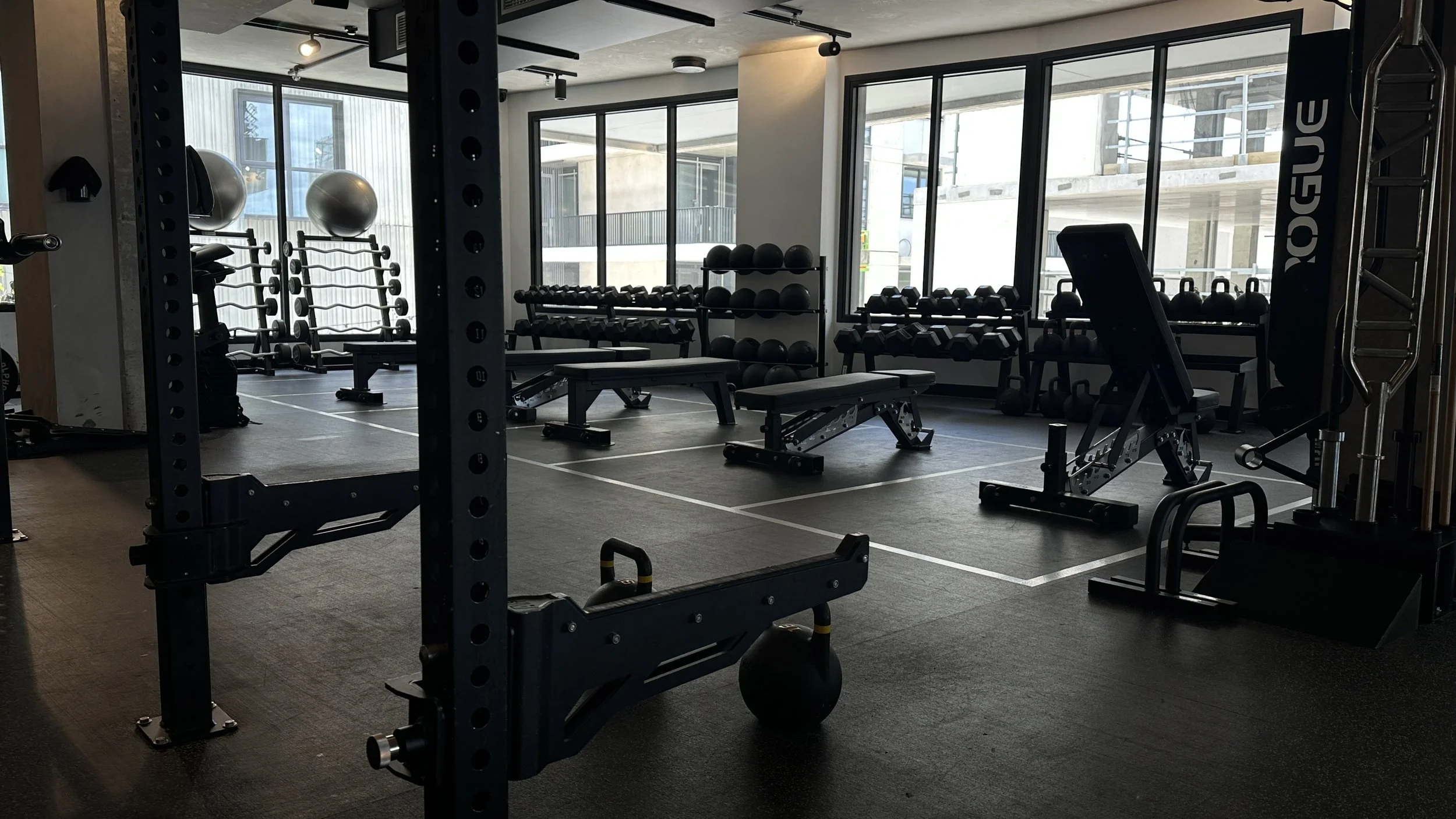
East Brunswick
Unit 102/6 Bluestone Way Brunswick East, VIC, 3057
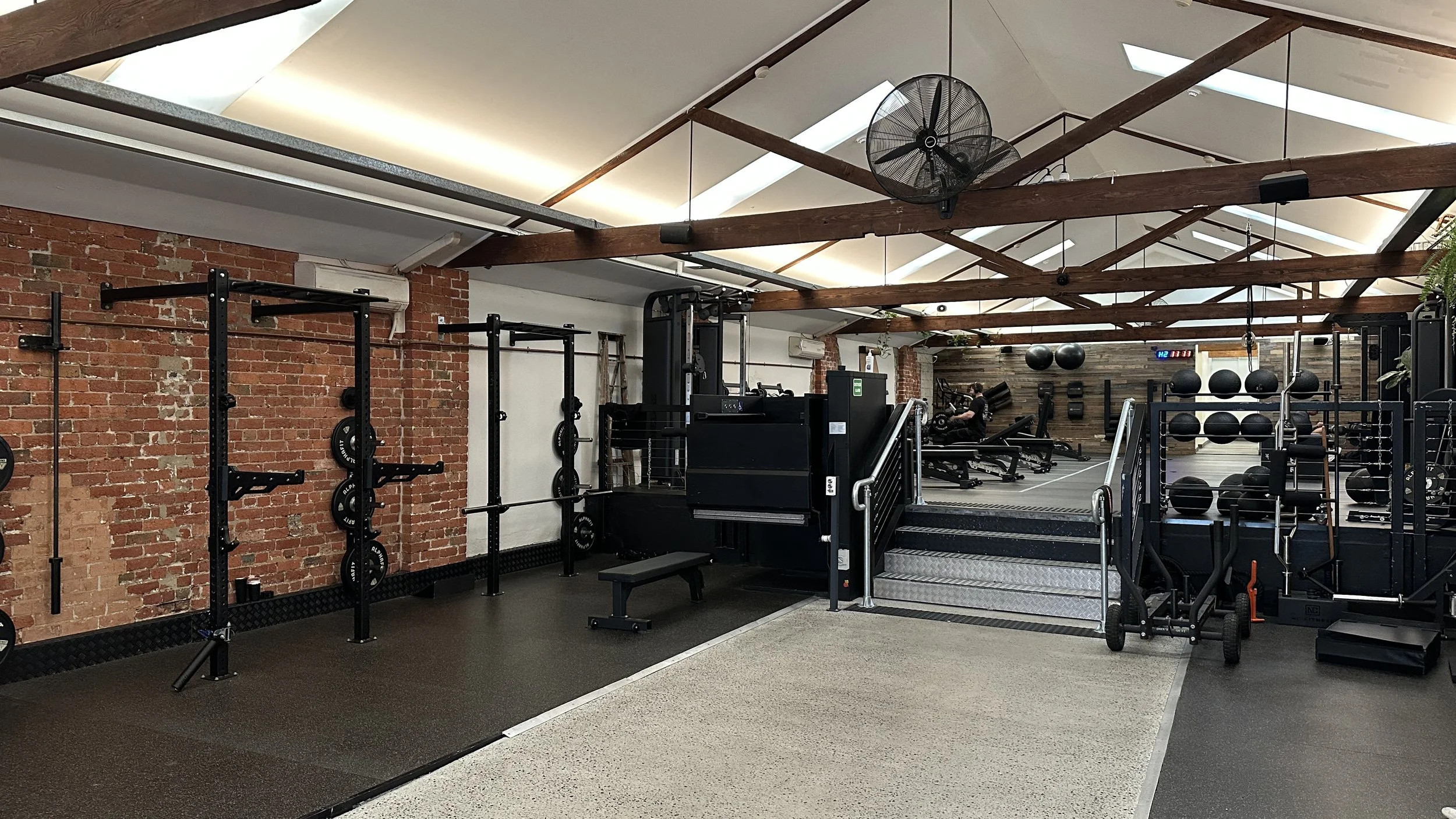
West Melbourne
45 Batman St. (Inside Project Better) West Melbourne, VIC, 3003
START HERE
Ready to Return to Your Sport?
Book a FREE 30-minute Discovery Call. No obligation — just a clear conversation about your injury, your goals, and whether we are the right fit.